The programme for the product leader of the future

AI does not make product leadership less important. It makes bad product leadership more expensive and more visible. So we built a programme for the new product leader. The programme is taught in Danish.

DKK 24,500 · Starts 15 January 2027 · Taught in Danish

Four premises.

Execution

AI accelerates production.

Code, prototypes, research and communication are produced faster than ever. That does not remove the need for direction and prioritisation. It sharpens it.

Decisions

The bottleneck moves.

When building gets cheaper, building the wrong thing gets more expensive. What is needed is people who make better decisions faster, not people who simply produce more.

Roles

Product, design and tech get access to each other’s domains.

Technical profiles can work commercially, and product people can get closer to the solution. That can cause role confusion. Or far stronger shared problem-solving.

Organisation

The feature factory gets more dangerous.

If the organisation is run by local wishes and backlog administration, AI accelerates exactly that. Product principles, discovery and judgement become more critical, not less.

What does a product leader need to master when output gets cheap?

Go deep. This is where you have to be sharper than everyone else

Discovery and validation become the core

When any good idea can end up straight in production, building the wrong thing gets expensive. Finally the focus can move to where we have said for ten years it should be.

From execution to judgement

The role shifts from producing yourself to setting direction and quality-assuring what AI makes. You have to be able to argue for why you build what you build.

Depth in vision, strategy and discovery

This is where the product leader has to go deeper than everyone else: set direction, dare to say no, and make sure what you build is something someone will pay for.

Get broad enough. Understand the neighbouring disciplines

The boundaries between disciplines blur

Product needs to understand more tech and design; developers more business. The new profile looks more like a "product engineer" than a classic role.

AI craft in practice

Being able to talk to an AI agent so you get what you want. Not a prompting course, but enough craft to work for real.

The foundation

A growth mindset is the entry requirement.

The most important competence is not technical. It is the will to move. Without it you get nothing out of AI.

A course cannot stand alone. We learned that the hard way.

Between us we have taught product people for over 20 years. Participants go home fired up after a good day on discovery and come back deflated, because the organisation at home works in a completely different way from the one the books describe. That is why the programme brings your organisation along, and the four pillars here are built to close that gap.

01 · The theory

Theory is ten percent.

You get the foundation as self-study before we meet. We do not spend our time together on what Cagan says about the product trio. We spend it on putting it to work.

02 · The sparring

You meet people who are in the same spot.

Participants always point to the same thing as the most valuable part. It was never the models. It was hearing how other companies do it. So the sparring carries the programme, it is not a break between talks.

03 · Your context

We come to you.

The programme does not stay in the classroom. We come into your organisation and give you an assessment at the start and another at the end. Not self-evaluation, but a view from the outside.

04 · Peer coaching

You become a coach yourself.

We match you with another participant, and you coach each other through the programme. You learn an unusual amount from observing someone else and putting feedback into words.

A programme that does not end with the course day.

The theory is done up front. The time is spent where things have to work: together with the others, and on site with you. This is how the four months add up.

2
days together in Aarhus
2
visits at your place
4
months in total
approx. 45
hours of your time
  1. 01
    Self-study: the foundation in place Short texts and videos, so we do not spend our days together on theory.
    On your own approx. 6 hours Weeks 1–3
  2. 02
    First gathering: a shared starting point The cohort meets, and you are paired with your coaching partner.
    In person, Aarhus Full day Week 4
  3. 03
    Assessment in your own context One of us comes to you and looks at how you work today.
    At your place Half day Weeks 5–6
  4. 04
    Group sparring on what you ran into Small groups, your own cases. What worked, and what did not.
    Online 2 × 2 hours Weeks 8 and 10
  5. 05
    Second gathering: the next iteration We take stock and sharpen what has to work back home.
    In person, Aarhus Full day Week 12
  6. 06
    Peer coaching with your partner You set the times yourselves. We give you the structure for the conversation.
    Online 1 hour every 2 weeks Weeks 4–16
  7. 07
    Closing assessment and your two plans An outside view again, and you leave with two plans ready to use.
    At your place Half day Week 16
You leave with

Two plans, not a diploma.

A personal development plan for you. And a company development plan that brings the organisation along. Because if it stands still, nothing happens, no matter how far you have moved yourself.

The people behind it

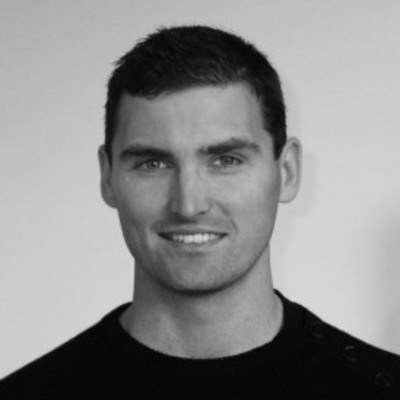
Portrait of Jesper Boeg

Jesper Boeg

Product and transformation consultant with roots in Trifork since 2006. Has driven some of the largest transformations in the Nordics, including a reorganisation of 2,000 people in R&D at Novo Nordisk and turbine development at Siemens Gamesa. Cagan school, anti-framework. Built a large training business, and today builds product with AI himself on a codebase of 150,000+ lines.

LinkedIn
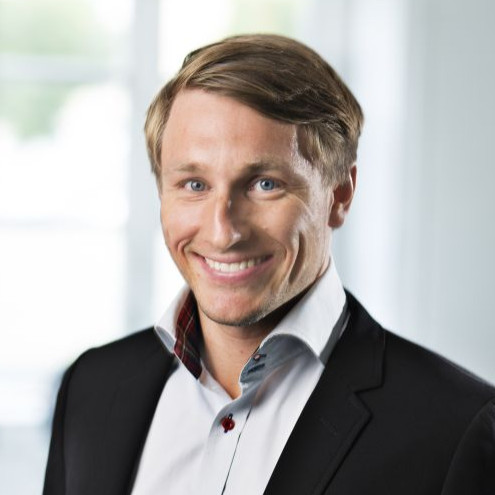
Portrait of Ulrik Plejdrup Christensen

Ulrik Plejdrup Christensen

15+ years of setting up product organisations properly, from team level through governance to leadership. Thinks in business models and packaging, has taught at university, and knows from experience where product work gets stuck. The one who sees the whole system, not just the single team.

LinkedIn
Portrait of Martin Ibsen

Martin Ibsen

Product leader, designer and AI builder with 15+ years in digital products. Has helped companies large and small succeed with product development through a human- and product-centric approach: product operating models, end-to-end product leadership, discovery and UX. Coaches product teams, accelerates development with AI and builds products himself every week.

LinkedIn

Are several of you coming from the same organisation?

Sign up for the cohort starting 15 January

DKK 24,500excl. VAT

Starts
Friday 15 January 2027
Format
2 days in Aarhus, 2 visits at your place, the rest online
Language
Taught in Danish. You need to understand Danish to take part
Time
Approx. 45 hours over four months
Payment
Invoice, once the cohort is confirmed

Binding only once the cohort is confirmed. We will get back to you with the dates of the two sessions. No spam.